
Community Solar
How to participate in solar energy without putting panels on your house

According to the government website for the National Renewable Energy Laboratory (Reference 4),
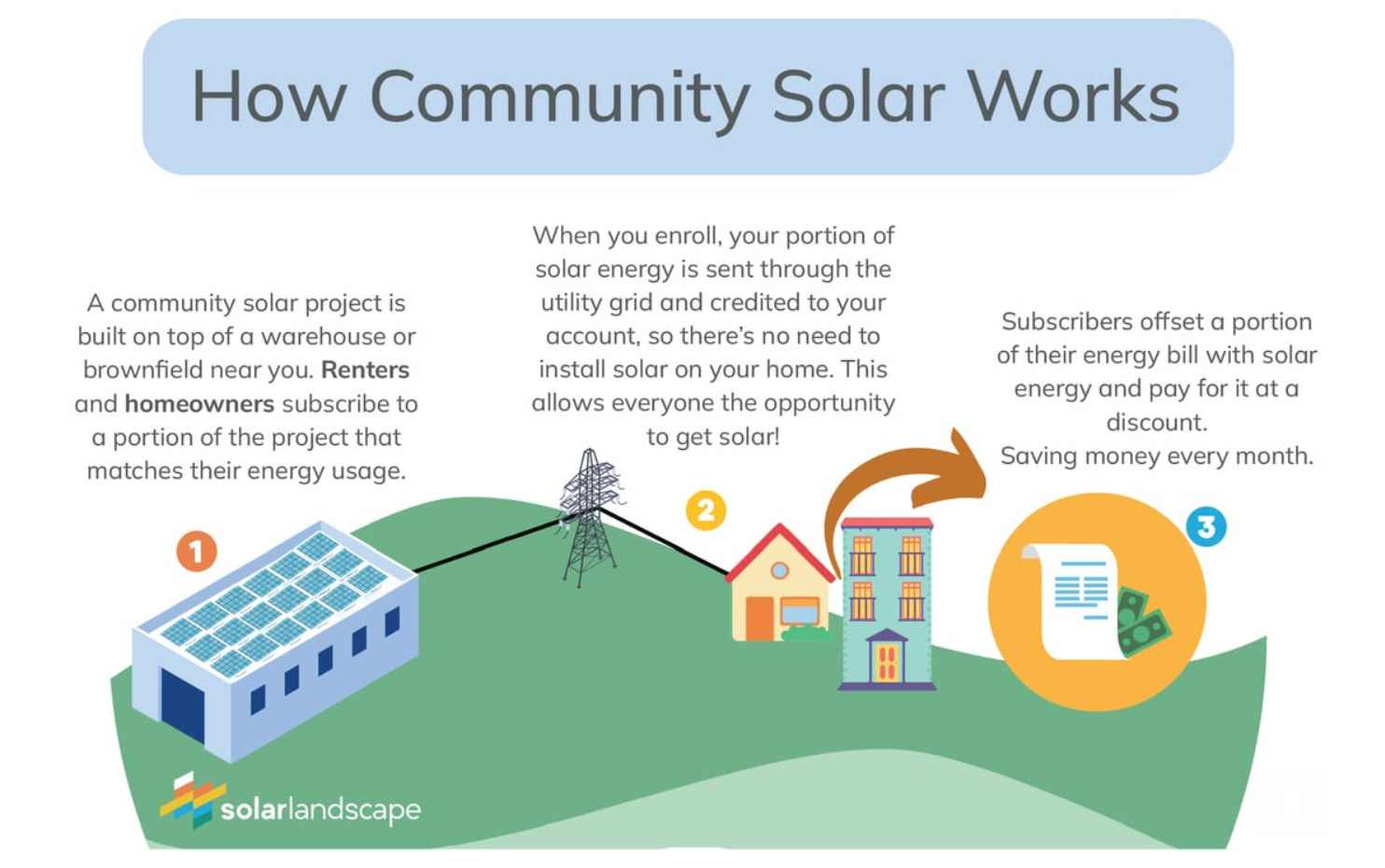
Community Solar, also known as shared solar or solar gardens, is a distributed solar energy deployment model that allows customers to buy or lease part of a larger, off-site shared solar photovoltaic (PV) system. Community solar arrangements allow customers to enjoy advantages of solar energy without having to install their own solar energy system. Community solar projects provide an alternative to rooftop solar systems for customers who:
· Can’t afford or can’t install or maintain their own solar systems
· Don’t have the appropriate roof geometry for solar panels
· Or who are tenants, who don’t own or control their roofs
As of December 2021, 39 states plus Washington DC had Community Solar projects, and 22 states plus DC had passed laws to formally encourage Community Solar.
In NJ, “Community Solar” is a program initiated by the NJ Clean Energy Act of 2018 and is overseen by the NJ Board of Public Utilities (Reference 3). The Clean Energy Act had several goals, besides making Community Solar generally available, as stated in Reference 1:
· To allow low-to-moderate (LMI) income families and renters to participate in solar energy as a form of environmental justice. Therefore, 51% of the purchasers of any Community Solar project must be LMI-qualified.
· To encourage development of solar energy projects and adoption of solar energy in many different locations. Therefore, you can only purchase community solar credits from a solar project that is close to you geographically.
· To promote workforce development for the expected need for solar installers. Note: If there are young people in your life looking for a career, Solar Landscape has a “Green Ambassador” program for students, that encourages students to pursue a career in solar technology, and they also have scholarships.
The Concept
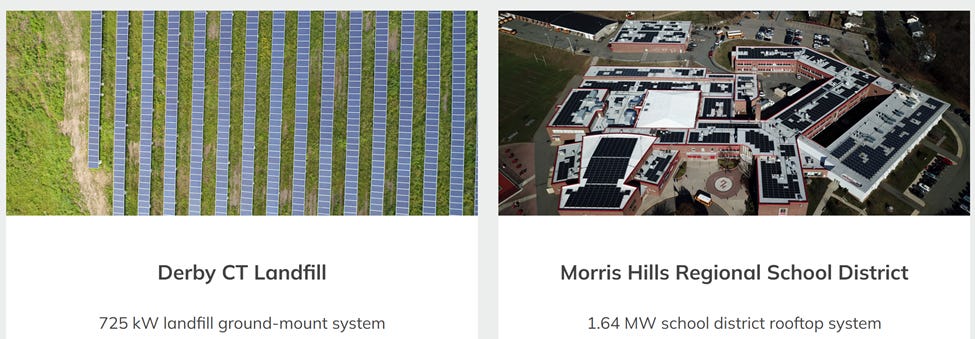
Solar projects can be built on large roof surfaces or open land. Even schools and churches have installed solar panels so that they can sell the power. Figure 2 has several photos of solar projects here in NJ that supply Community Solar power.
A solar developer such as Solar Landscape, will usually be involved. They recruit potential suppliers and subscribers, as well as managing the solar panel installation project, licensing it with the state, and coordinating with the local utility.
Community Solar is different than purchasing energy from other third party suppliers of renewable energy, e.g. CleanChoiceEnergy, because it guarantees that the price per kWh is the same as what the utility pays for standard grid power.
Finding an Eligible Project and Signing Up
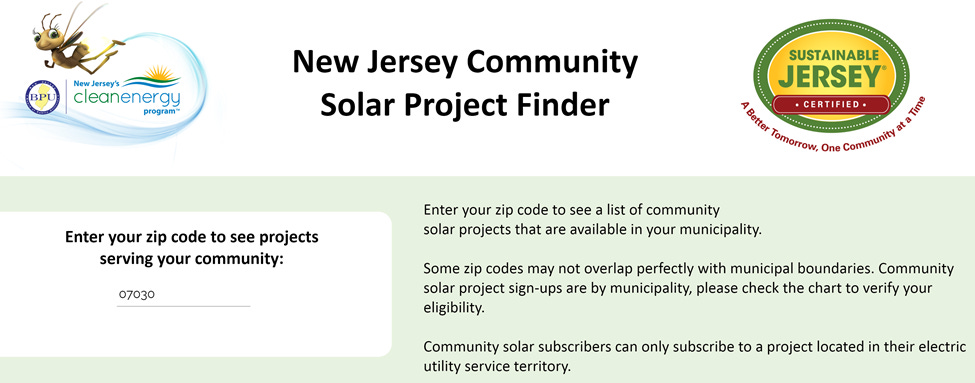
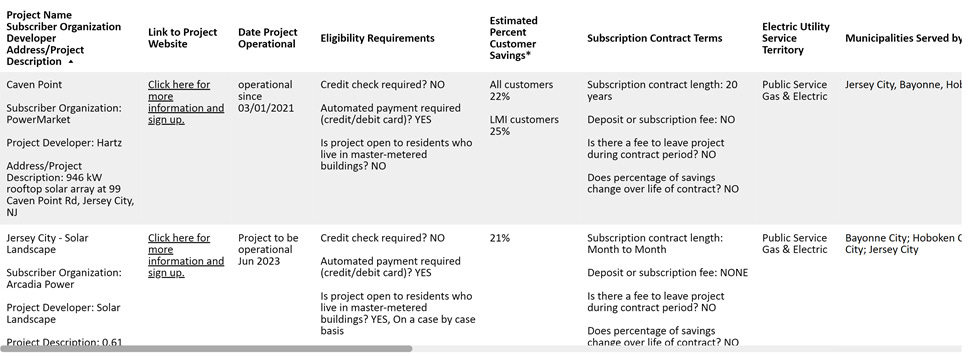
While there are many Community Solar projects, you may not be able to find one that you can use. There may not be any in your area, they may be fully subscribed, or some of the subscriptions may be reserved for LMI customers. Figure 3 below shows how to use New Jersey’s Clean Energy Act program website search for projects that you qualify for, in your area. This part of the website also allows you to look for the customer savings discount percentage, which varies according to the project, and to click to get more information and to sign up.
The Bill
The billing for Community Solar can be a little hard to understand, but here are the basics.
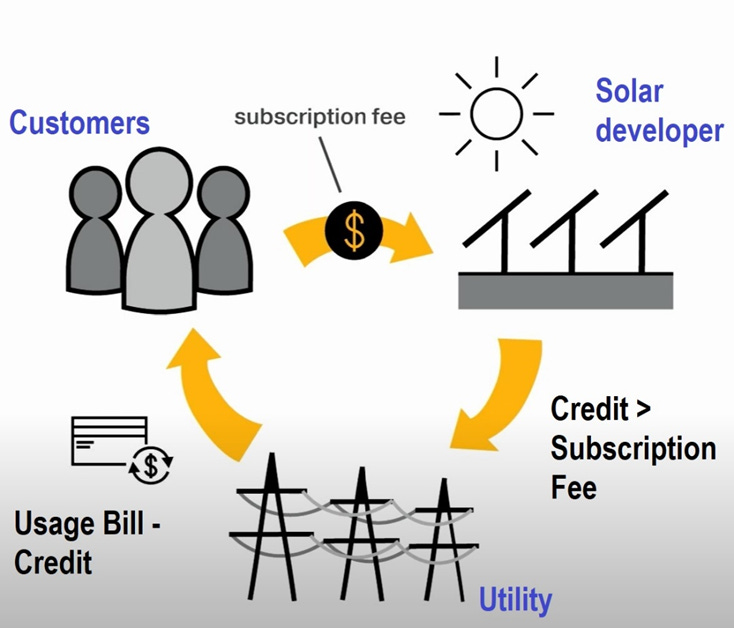
After signing up as a subscriber to a specific project with the solar developer, the developer will study your energy usage and figure out how many of the project’s solar panels to assign to you, so that it covers your likely usage. You will receive the energy from those panels. You are also given a specific discount, that is good for the life of the project. Recent discounts from Solar Landscape are about 20%. If you use more electricity than what those panels provided, your utility supplies that additional energy from the standard grid without the discount.
You pay a monthly subscription fee to the solar developer, which is the cost of the energy you used that month from your solar panels, minus the promised discount.
You receive your monthly electric bill from your utility company, which applies a credit for the solar power that your panels generated (not to exceed the amount that you used).
The money you save is the discount from the solar developer - you paid for only 80% or so of the power that you used but got a credit at the utility for 100% of the price.
If your solar panels generated more energy than you used, the solar developer keeps a credit balance in your account and applies it when you use more than you generated. At the end of the year, if there is still a credit balance, you receive a dollar amount that is equal to the WHOLESALE price of the energy, not the retail price that your utility company charges you. So, it is much less, but the credit isn’t entirely lost.
Note from Yvette: If someone's energy usage changed dramatically, due to one or more EV chargers or heat pumps, etc, then the solar panels that were assigned to you may not be covering as much of your bill as they did originally. You still get the energy and the credit, but you may want to be assigned additional solar panels if they are still available, so that you can utilize more discounted energy.
The figure below shows this process.
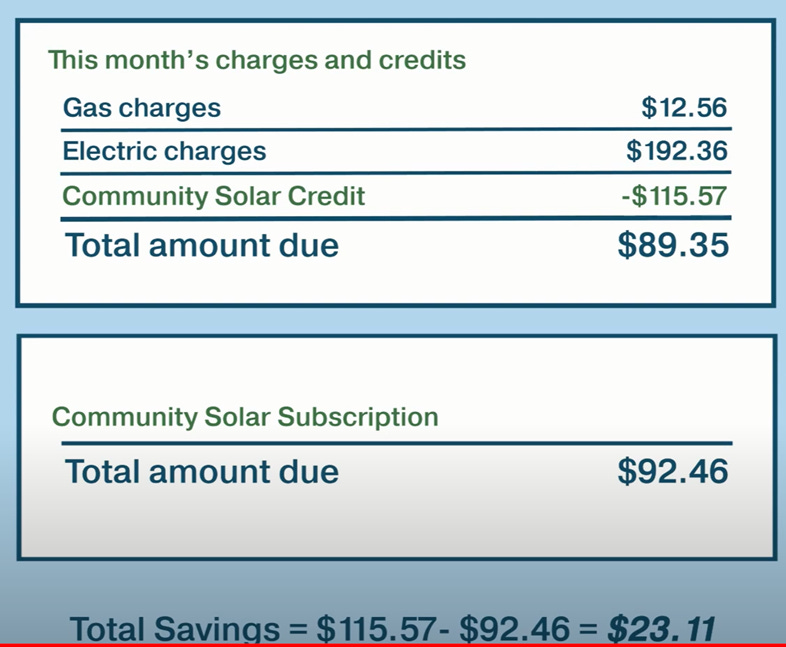
Sometimes this is easier to understand if you look at examples of the bills you receive. Here’s a more concrete example from the NJ Clean Energy site, in the figure below.
The top portion is the utility bill. You continue to pay for your natural gas as usual ($12.56).
The electricity portion of the bill also contains a credit from the solar developer representing the value of the energy generated by your portion of the solar array ($115.57). It may not cover your entire electricity usage for that month ($192.36), so you pay for the extra energy you used, without getting a discount.
Community Solar only bills you for 80% (if you have a 20% discount) of the energy that you used and this is the subscription fee ($92.46 = 80% of $115.57). Therefore, the money that you save, bottom portion of the figure, is the difference between the credit on your utility bill and the subscription fee. ($115.57 - $92.46 = $23.11).
The credit cannot exceed your monthly bill, and if it does, the excess credit is carried over to the next bill. The excess at the end of a year is creditted to your account as I mentioned above, at the WHOLESALE price, not the retail price.
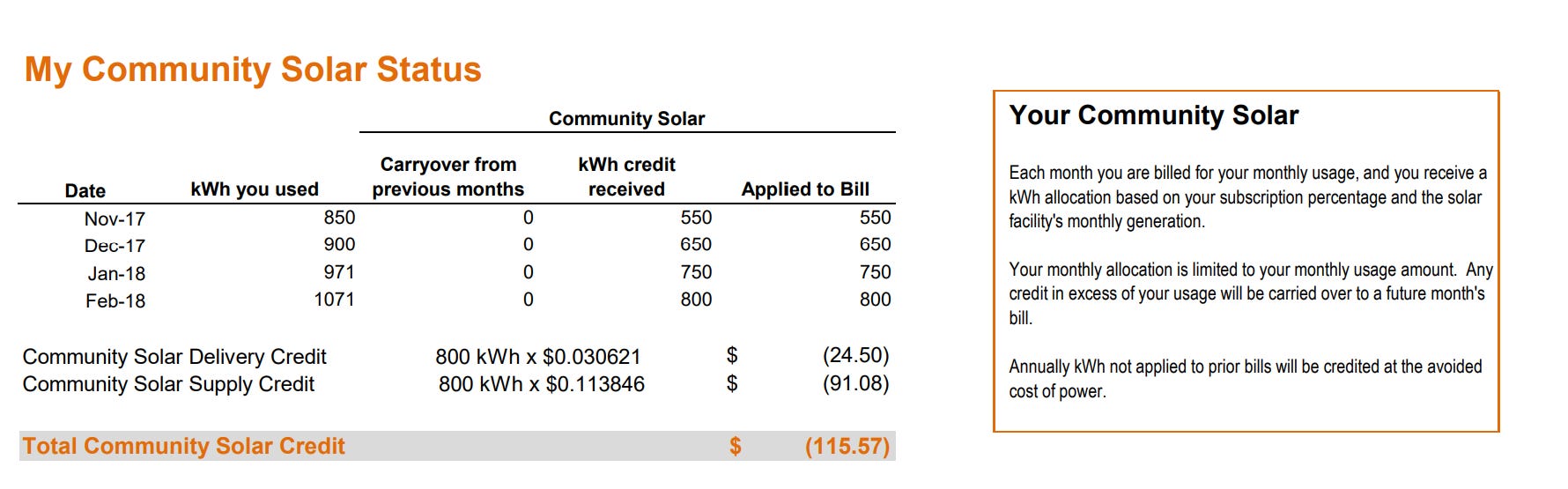
Sometimes the utility will work together with the solar developer to reduce confusion, and you will receive a single bill with BOTH the subscription fee (supply credit) and the discount (delivery credit) on the same bill. Here’s an example from the NJ Clean Energy website that shows a sample PSE&G bill representing this same example, and how the bill is calculated. The 800 kWh of electricity that was used generates the credit.
The Contract
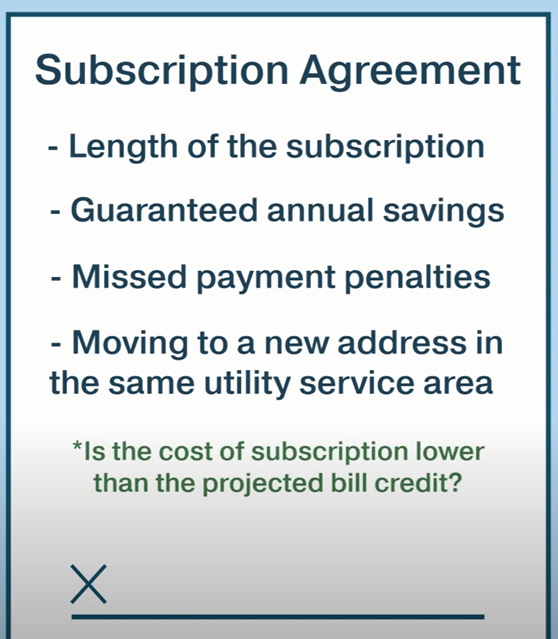
You DO have to be careful when reviewing your individual contract from the solar developer. The terms vary by development site, as well as by developer. (The NJ Solar Finder site below lists the specifics of these terms for each project.) Each solar project and developer establishes a contract. The figure below lists important criteria to look for. In the presentation in Reference 2, Solar Landscape offers a reduction percentage of 21% that is negotiated when the commitment is made, and lasts for the life of the solar panels, typically a little more than 20 years. The homeowner may start or stop the contract at any time, and the solar panel owner simply finds someone else who wants to adopt the credit. Make sure you can cancel the contract if you move.
Additional Info and Conclusion
Finally, there is a very thorough and easily understood presentation of Community Solar concepts, that was organized and hosted by Steve and Pat Miller (See Reference 1) of the Jersey Shore chapter of the Sierra Club. The speaker is Yvette Viasus, Community Engagement Manager of Solar Landscape, Inc, one of the largest providers of Community Solar power in NJ (See Reference 2). The presentation is available on YouTube (Reference 3 ). The question-and-answer period is as informative and interesting as the presentation. If you are serious about signing up for Community Solar in NJ, you should watch this presentation.
NJ’s Clean Energy Bill allocates support for Community Solar in phases. We’re currently in Phase 2. Advocate for additional support for new phases, allowing additional development.
In conclusion, Community Solar is a no-muss, no-fuss method for participating in the use of solar energy. Just review the contract carefully. (Personal note from Dr. Judith Green: She is using and enjoying her Community Solar subscription.)
References
1. Steve and Pat Miller’s website
Their website deals with many climate issues, but especially focuses on building and home construction and home energy usage. They have monthly webinars, and an archive of previous webinars. A great resource with knowledge of NJ issues!
Part of this site deals specifically with solar power and the alternative methods of taking advantage of the opportunities.
One of the presentations listed there is one about Community Solar, and features speaker Yvettee Viasus, the Community Engagement Manager of Solar Landscape. There’s a lot of great information, and the question-and-answer session is as informative as the general presentation.
2. Solar Landscape website. This company is one of the largest solar developers in NJ.
3. New Jersey’s Clean Energy Act program website which establishes Community Solar in NJ.
It contains a very informative 3-minute video that summarizes Community Solar:
And there is also a link to a webpage enabling you to find a local Community Solar project that you would be eligible for, by typing in your zip code, although I recommend going through the website above:
https://lookerstudio.google.com/embed/reporting/e61544cd-a71b-4121-8263-b958c4843d67/page/L3soC
4. National Renewable Energy Laboratory website
Email from Yvette Viasus of Solar Landscape with details about pricing:
A community solar developer will look at the utility profile of the prospective customer to estimate their energy usage and reserve a portion of the project based off of the energy usage (similar to what happens when a residential solar company does when they size a system for your house)
Subscribers will then begin to experience a solar credit on their electric bill for the total portion of solar energy made for their account of which they will pay at a discount which is proposed by the project regardless of their energy usage. (The Community Solar credit’s value is determined by the state and is made to be at the market rate per kwh ensuring discounts for subscribers of any project that has a discount associated to their enrollment)
The discount is not based off of the customers energy usage. It is based off of the general discount the project has determined for subscribers or a specific community. The discount for projects will remain the same regardless of changes to their energy usage. Other projects will have a set discount depending on different factors and the community they are serving. The discounts are generally defined for the life of the project. (If someone's energy usage changed dramatically, due to one or more EVs or something like that, then the percentage of the total project’s production associated to that account would have to be re-evaluated by the developer.